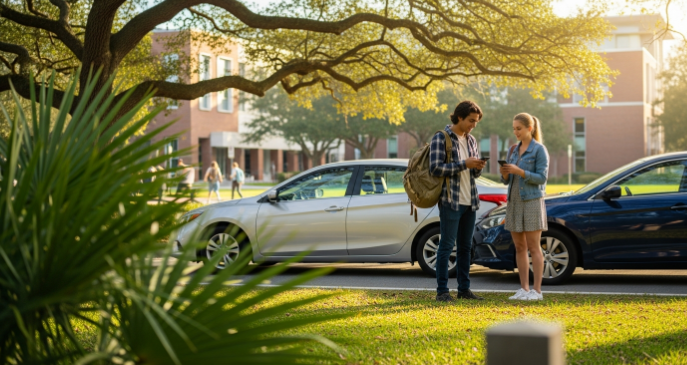
Treat a minor crash on your campus commute as a safety issue first and a paperwork issue second. If you can do it safely, move out of traffic, check for injuries, exchange information, document the scene, and report the crash to law enforcement or your insurer as needed. If the wreck makes you late or unable to attend class, contact your instructor or the right campus office as soon as you can.
What to do right away
A step-by-step process can help you stay calm and handle the legal and academic pieces without missing anything. Run through this checklist to sort out your immediate priorities after a collision.
- Move to safety if you can. Pull out of traffic if the vehicle can move safely, and turn on your hazard lights to warn other drivers.
- Check yourself and others for injuries. Call 911 right away if anyone is hurt, dizzy, confused, or unable to move safely.
- Call law enforcement when needed. Florida law requires you to report crashes involving injury, death, commercial vehicles, or vehicles that need towing.
- Exchange information. Collect names, phone numbers, driver’s license numbers, plate numbers, vehicle descriptions, and insurance details from all involved drivers.
- Document the scene. Photograph vehicle damage, the surrounding area, road signs, weather conditions, and where each vehicle came to rest.
- Notify your insurance company. Report the facts clearly and promptly. Don’t guess about fault or apologize at the scene.
- Tell your instructor or campus office if attendance is affected. This matters most if you’ll miss labs, clinicals, testing, or work-based learning requirements.
When a “minor” crash may not stay minor
It’s easy to shrug off a low-speed collision when you’re rushing to class or work. But small crashes have a way of turning into larger problems over time.
Injuries can show up later
Neck, back, and soft-tissue pain may appear hours or days after impact. Concussion symptoms can also be delayed. If any symptoms develop, seek medical care right away and keep a record of your visits.
Small damage can still lead to disputes
Scratches, bumper damage, and broken sensors or cameras can be expensive to repair. Photos and personal notes help establish the facts if the other driver changes their story later. And if someone leaves the scene without exchanging details, call law enforcement immediately.
Crash-related delays are a regular part of Florida commuting, with recent morning incidents causing major backups on I-75 in Manatee County, I-95 in Martin County, and I-4 in Orlando. Broader safety concerns remain high, too: a recent MetroPlan Orlando survey found unsafe driving and traffic were top commuter frustrations, with one in five respondents saying texting while driving was acceptable.
Why reports, citations, and insurance follow-up can matter
Even when the damage looks small, official documentation plays an important role in the weeks after a crash. These records can affect your finances, your driving privileges, and your academic standing.
A crash report can protect your version of events
Official reports help when there’s disagreement about what happened. They can be useful to your insurer as it processes a claim, and students may want them on hand if a crash causes missed classes, work shifts, or clinical time.
A citation can affect more than the day of the crash
In Florida, a cited at-fault crash may appear on your driving record. Insurance companies often review that record after a claim when adjusting your rates. Some employers, internships, rideshare platforms, or driving-related jobs may also check these records during background screening.
So how long does any of this linger? If you’re wondering how long accidents stay on your record, the answer in most cases is three to five years. Minor traffic violations generally stay for the same period, while serious offenses remain much longer. For advice about your specific situation, contact the Florida Department of Highway Safety and Motor Vehicles (FLHSMV), your insurer, or a qualified attorney.
Insurance costs can rise after an at-fault crash
At-fault accidents typically increase premiums by 20% to 60%, or about $600 to $1,500 more per year. One nationwide study found drivers saw an average premium jump of 45.0% after an at-fault claim of $2,000 or more. Another insurer-based estimate puts the average increase at roughly 34%, or $800 annually. Rates vary based on your insurer, the claim size, your driving history, and the fault findings.
Quick comparison: what needs immediate action and what can happen next
Knowing which steps are urgent helps you prioritize while you’re still at the scene. Use this table to see what you should do immediately versus what matters later.
| Situation | What you should do now | Why it matters later |
|---|---|---|
| Someone may be injured | Call 911 and seek medical help | Symptoms and records may affect care and claims |
| Vehicles are blocking traffic | Move to safety if possible and use hazard lights | Reduces the risk of a second crash |
| The other driver disputes what happened | Take photos and call law enforcement if needed | Documentation helps insurers review the crash |
| You receive a citation | Keep copies and follow instructions by the deadline | It may affect your record or insurance |
| You miss class, a lab, or a clinical | Email your instructor or campus office as soon as possible | Early communication may help with attendance or make-up work |
| Damage seems minor | Report the crash to your insurer promptly | Hidden damage can appear later |
What Polk State students should do next
A minor crash can create bigger problems down the line if you don’t keep good records or communicate early. Save your photos, insurance claim details, and any report information, and pay attention to delayed symptoms. If the crash affects class, labs, clinicals, or accommodations, reach out to your instructor and review Polk State support resources so you can keep moving forward.
For short-term academic barriers caused by crash-related injuries, you can review what the Office of Disability Services (ODS) provides. And if you’re able, take a few minutes after the crash to organize your notes, photos, and contact information. That small step can make insurance follow-up, class communication, and any later questions far easier to handle.